One Brief, Every Deliverable
Powers your A+, listings, storefronts, and pages.

Turn onboarding inputs, reviews, competitors, keywords, and shopper signals into a structured research report your team can use for strategy, copy, and visuals.
Powers your A+, listings, storefronts, and pages.
Your logo, your dashboard, your brand.
Skip the manual work. Keep the depth.
Send the form, the research generates itself.
When your research stops at surface-level reviews, competitor scans, and obvious category insights, your strategy starts from the same information everyone else has. That is why your listings blend in, your copy sounds generic, and your creative starts feeling like it came from the same AI prompt as everyone else.
Research isn’t a box to tick before the real work starts. It’s the layer that decides whether the creative sells or sits.
Brand inputs, reviews, competitors, keywords, category patterns, and buyer behavior all hold useful signals. Without a defined process for what to extract and prioritize, the insights that should shape strategy get missed.
When every person researches differently, the output reflects the capability of the individual, not the standard of the agency. One project gets depth, another gets a lighter scan, and quality becomes harder to repeat.
Weak research creates direction changes later. Copy gets rewritten, visuals get adjusted, approvals drag, and team bandwidth that could move the next project forward gets spent fixing the current one.
When the research layer is shallow, the creative direction becomes narrow. Copy and visuals start from scattered assumptions instead of clear buyer logic, competitor gaps, and proof priorities.
It Doesn’t Just Cost Time. It Costs Trust.
When the work feels under-researched, clients question the value they paid for. Extra revisions, unclear decisions, and weak justification make the agency look less strategic, even when your team has the talent.
Give every project the same research depth, quality, and creative-ready direction.
Quality depends on who’s staffed that week
Your senior’s depth on every brief, even the ones they never touch
You can’t promise what you can’t repeat
A quality bar you can sell upfront and hit every time
Revisions pile up from shaky research
Fewer rounds, because the thinking was right before design started
Listings that hope to convert
Listings engineered to convert, not left to luck
Built to help your team decide what to say, what to prove, and what to prioritize in under a minute.
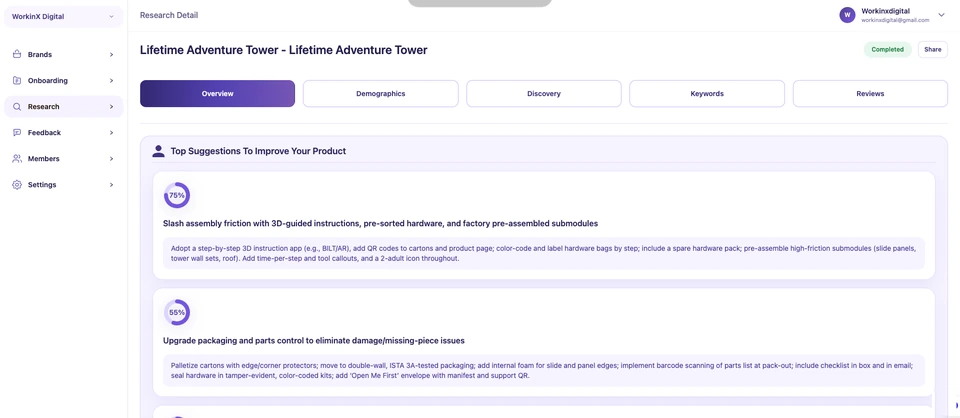
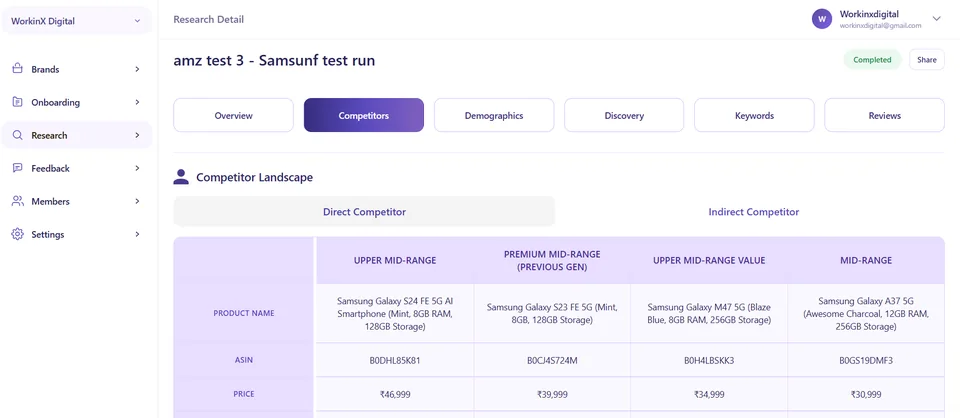
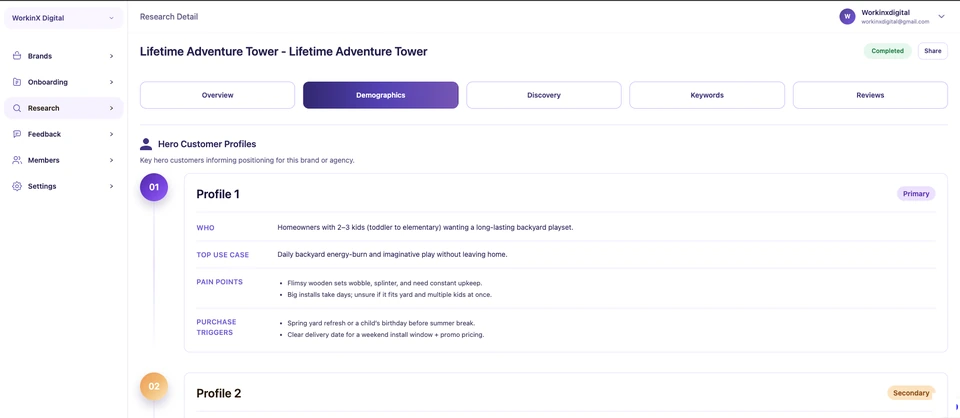
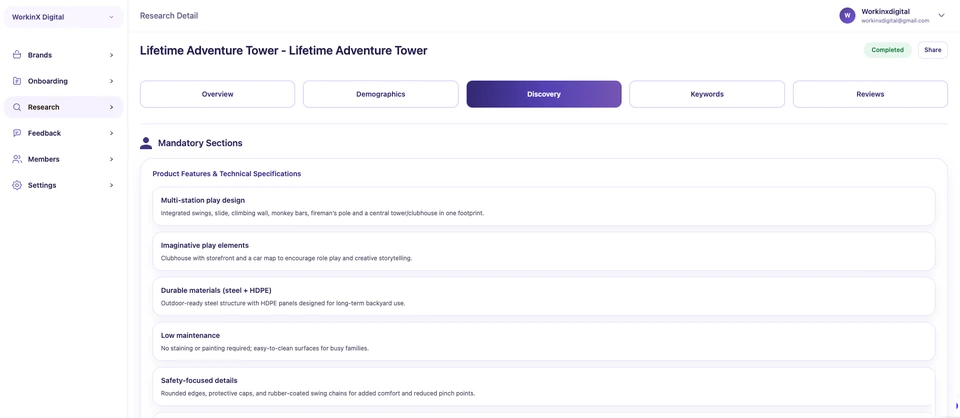
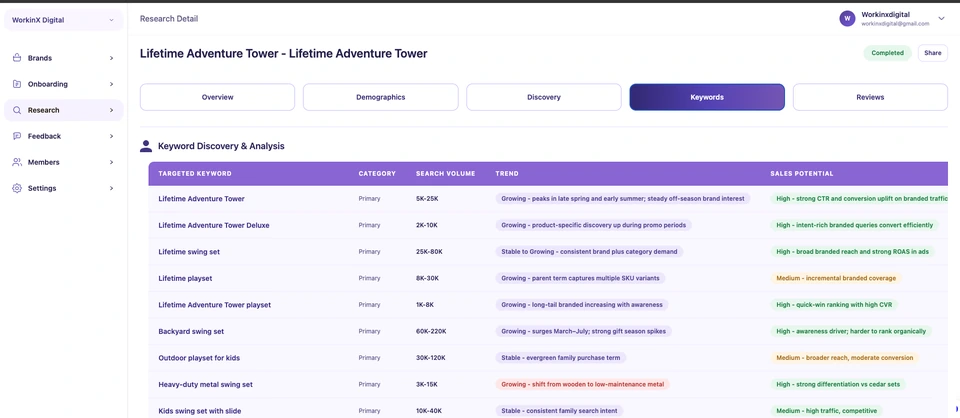
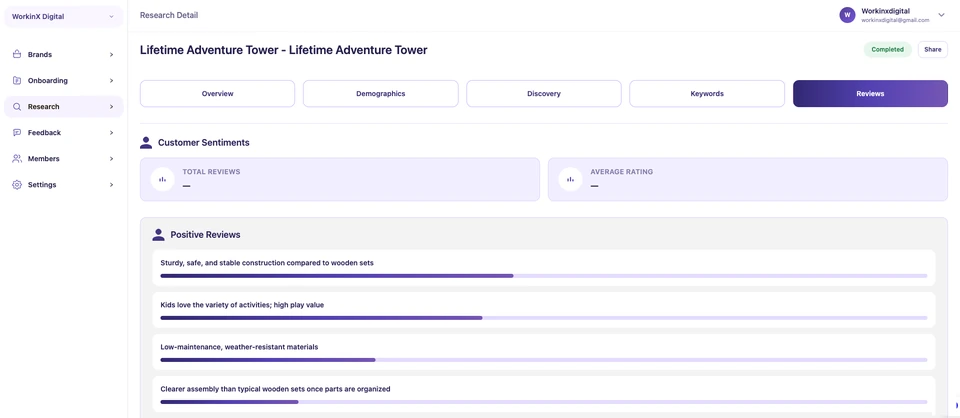
AI can give you an answer. The Research Engine is built to surface the 1% insight your creative should actually be built around.
Here’s where the difference actually lies ↓
One structured brief. On-brand output across every deliverable.
One brief feeds every asset your team ships
Modules built from the research layer: the objections to answer, the proof to lead with, and the buyer logic behind each section, instead of a template filled in afterwards.
Titles, bullets, and backend terms built from real category research, so the listing earns the impression before it ever has to earn the click.
Not a catalog. Your brand’s landing page on Amazon: a guided journey shaped by what the research says shoppers need to see before they trust the range.
Off-Amazon pages carrying the same brief, so the story a shopper meets on your site is the one they already met on the listing.
No. The Research Engine is built to systemize the research framework your team already needs. It gives strategists, copywriters, and designers a stronger foundation, while your team still makes the final strategic decisions.
The research is built from the inputs that matter for that specific project, including brand information, Amazon listings, competitor data, reviews, websites, keywords, and shopper signals. Each report is generated around the brand, not a generic category template.
The system provides a structured research foundation, while keeping your agency’s workflow and decision-making at the center. Your team can use the insights based on the deliverable, category, and client requirements.
No. The experience is completely white-labeled under your agency’s brand. Your clients interact with your process, while your team uses the system behind the scenes to create a more consistent research workflow.
Your logo, your dashboard, your agency name. Clients see only you, never the system running underneath.
Run every client’s onboarding from one place, and look organized and operationally mature from the first interaction.
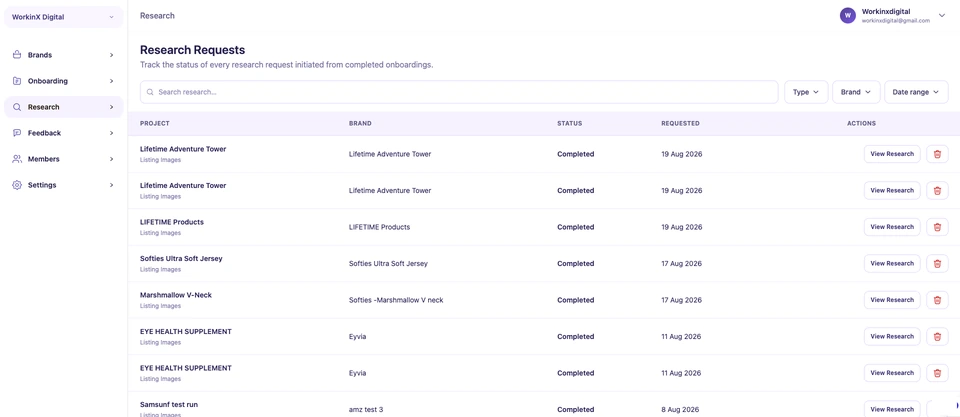
Same engine underneath. Only the name on it changes.